

Introduction
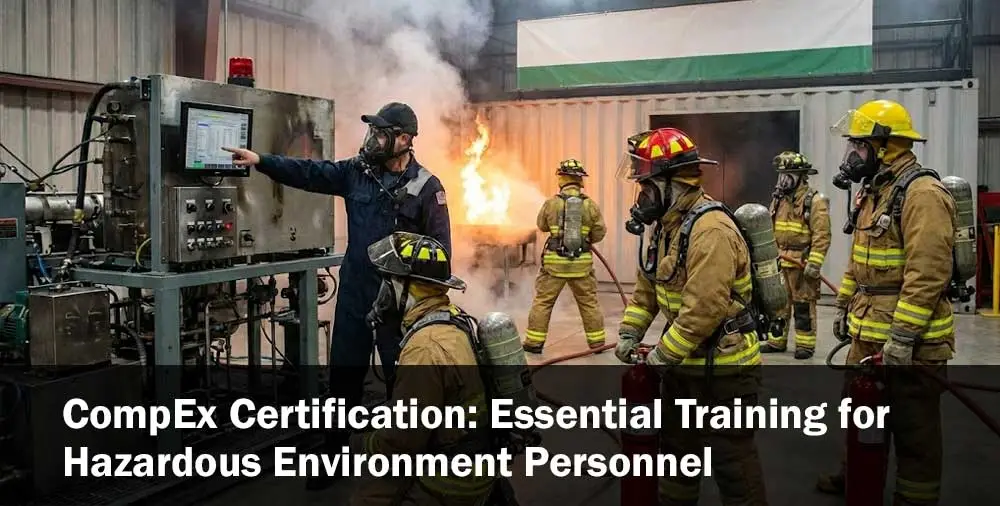
Operating safely within potentially explosive atmospheres requires not just awareness but certified competency. The CompEx Certification program provides the industry-standard training and assessment framework to equip engineers, electricians, and technicians with the knowledge and skills needed to work safely in hazardous locations. This comprehensive guide details the CompEx scheme from foundation courses to advanced modules, benefits for personnel and employers, and how to achieve and maintain certification for compliance and safety excellence.
What is CompEx Certification?
CompEx is the globally recognized personnel competency certification for those working in hazardous areas classified under ATEX and IECEx standards. Originating to harmonize skills assessment across the industry, it covers a spectrum of competencies including electrical and mechanical safety, inspection, installation, and maintenance of equipment used in explosive atmospheres.
The scheme’s modular courses target different scopes of work, tailored for various roles within hazardous environments, ensuring each certified individual demonstrates competence aligned with their responsibilities and hazards encountered.
Levels of CompEx Certification and Course Structure
1. CompEx Foundation (ExF)
The introductory and theory-based course designed for newcomers to hazardous areas. It introduces the basics of hazardous area principles, classification, safety approaches, and the essential requirements for safe working.
2. Gas and Vapors Competency Courses (Ex01 – Ex04)
Comprehensive training for electrical and instrumentation operatives working with gas or vapor atmospheres:
Ex01: Equipment Selection and Checking
Ex02: Installation and Commissioning
Ex03: Inspection and Maintenance
Ex04: Repair and Overhaul
These combine classroom theory and practical assessments to certify core competencies.
3. Dust Atmosphere Courses (Ex05 – Ex06)
Specialized training for those working in locations where combustible dust presents a hazard, with modules specific to ignition sources from dust accumulation and fiber handling.
4. Advanced Technical and Engineering Courses (Ex11, Ex12, Ex14)
Specialist certifications targeting mechanical operatives, application design engineers, and responsible persons overseeing hazardous areas, focusing on high-level design, inspection, and management skills.
Who Should Pursue CompEx Certification?
- Electricians and instrumentation engineers working at height or in confined explosive atmosphere locations
- Maintenance and inspection personnel conducting regular checks in hazardous zones
- Mechanical operatives involved in equipment repair and overhaul
- Design engineers responsible for specifying and installing hazardous area equipment
- Site supervisors and safety professionals managing hazardous area compliance
Employers often mandate CompEx certification to demonstrate workforce competency in hazardous area safety. For industry-specific training programs, visit CompEx Certification Services in UAE, Qatar, Oman, KSA, India
The Importance and Benefits of CompEx Certification
- Enhanced Workplace Safety: Certified professionals significantly reduce the risk of ignition accidents.
- Regulatory Compliance: Meets ATEX and IECEx competency requirements, fulfilling legal and insurance obligations.
- Career Advancement: Provides recognized certification improving employability and professional standing.
- Global Recognition: Valued internationally, enabling mobility across hazardous area markets.
- Reduced Liability: Demonstrates to clients and regulators a commitment to safe, competent operations.

Did You Know?
CompEx Certification is often a pre-requisite for projects in Middle East and Gulf Cooperation Council (GCC) countries requiring personnel competency validation.
How to Enroll and Prepare for CompEx Training
Finding an Accredited Training Provider
Select a recognized center offering official CompEx courses, either classroom-based or including blended learning formats. The Kingmsen Group in the UAE is an example of a reputable provider offering certified courses and support.
Preparation Strategies
- Review course study materials provided by training bodies
- Engage in practical exercises and mock assessments
- Understand hazardous area classifications and equipment categories
- Prepare for both theoretical exams and practical competency demonstrations
Explore IECEx Training Programs for complementary safety training.
Certification Process and Examination
- Complete all required training modules corresponding to your work scope
- Pass the theoretical examination covering hazardous area principles and standards
- Demonstrate practical skills through supervised assessments
- Receive CompEx certificate and ID card valid for 5 years
Periodic refresher courses (e.g., CompEx Refresh Ex01-Ex04) are required to maintain certification, ensuring up-to-date knowledge with evolving safety standards.
Mini Q&A

What happens if I fail the CompEx exam?
You can usually resit the exam or retake relevant course modules within a set timeframe.
Conclusion
Obtaining CompEx Certification empowers hazardous area workers with essential knowledge and practical skills to operate safely and confidently. It safeguards lives, assets, and regulatory compliance while advancing career prospects.
Comprehensive training and ongoing certification ensure personnel stay current amidst evolving industrial safety requirements.
Begin your CompEx certification journey with accredited providers today to contribute decisively to safer hazardous workplaces and comply with international safety mandates.
Frequently Asked Questions (FAQs)
What is the duration of CompEx certification validity?
Can CompEx training be done online?
Do I need CompEx if I have ATEX training?
What prerequisites are there for CompEx courses?
Is CompEx recognized internationally?
Yes, it’s recognized across the Middle East, Europe, and many global hazardous industry markets.