

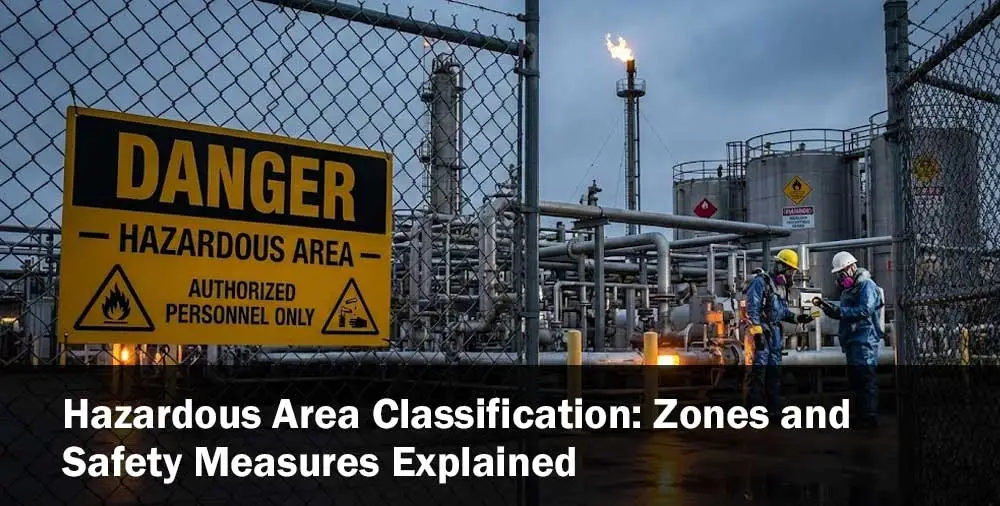
Introduction
Safety in hazardous industrial environments depends critically on precise hazard identification and effective risk management. Hazardous Area Classification is the foundational step to categorize regions with potential explosive atmospheres caused by flammable gases and dust. This classification guides the selection of protective equipment and procedures to prevent devastating incidents. This guide delves deeply into the zone systems defined by ATEX and IECEx standards, the scientific and operational basis for classification, risk factors, and essential safety measures. Whether you manage a petrochemical plant, grain storage facility, or any site exposed to flammable substances, understanding this classification will help protect assets, lives, and ensure legal compliance.
What is Hazardous Area Classification?
Hazardous Area Classification is a structured method for assessing and designating areas where explosive atmospheres may occur. It involves systematic evaluation of:
- The properties of materials present
- Frequency and duration of explosive conditions
- Environmental factors such as ventilation and temperature
- Potential ignition sources
This leads to zoning, which determines the necessary protection level for equipment and operational safety.
Detailed Zone Classification by ATEX and IECEx
ATEX and IECEx align in their hazardous zone definitions but provide globally recognized safety standards:
| Zone | Gas Atmospheres | Dust Atmospheres | Description | Equipment Category |
| Zone 0/20 | Explosive gas atmosphere present continuously or long periods (>1000 hrs/year) | Explosive dust present continuously or long periods | Highest Risk Area | Category 1G / 1D |
| Zone 1/21 | Explosive gas atmosphere likely during normal operation (10-1000 hrs/year) | Explosive dust likely present during operation | Medium Risk Area | Category 2G / 2D |
| Zone 2/22 | Explosive gas atmosphere unlikely and if present, short duration (<10 hrs/year) | Explosive dust unlikely and short duration | Low Risk Area | Category 3G / 3D |
Methods for Hazardous Area Classification
Step 1: Hazard Identification
Understanding all flammable materials is essential. Chemical composition, flashpoint, and volatility must be considered.
Step 2: Source Characterization
Analyze potential release points, leak frequencies, and volumes of flammable substances.
Step 3: Environmental Analysis
Consider ventilation rates, airflow dynamics, equipment temperatures, and ambient conditions affecting dispersion.
Step 4: Ignition Risk Assessment
Identify possible ignition sources such as electrical sparks, hot surfaces, and mechanical friction.
Step 5: Zone Boundary Delineation
Define physical boundaries of hazardous zones for marking and equipment placement.
More on Zone Boundaries and Safety Buffer Distances
Zones are often geographically mapped and marked with distinct signage. Safety buffer zones are defined to minimize accidental gas/dust exposure, which vary depending on process, ventilation, and equipment sensitivity.

Did You Know?
India, UAE, and Saudi Arabia increasingly adopt IECEx and ATEX zone classification frameworks aligned with international safety standards for hazardous industries.
Equipment Selection and Zoning Interdependence
The risk-based zone defines the category, type, and construction of equipment permissible.
- Zone 0/20: Requires Ex equipment with highest protection (‘intrinsically safe’ or explosion-proof housing).
- Zone 1/21: Requires robust equipment capable of handling intermittent explosive atmosphere exposure.
- Zone 2/22: Allows less stringent equipment designed for rare exposure incidents.
Extended details on product categories and certifications are available on ATEX IECEx Certified Equipment.
Common Errors and Best Practices in Classification
- Neglecting passive factors like ventilation shifts
- Using wrong PPE and equipment due to zone misinterpretation
Mini Q&A

Is zone classification mandatory in all countries?
Zones are mandatory where explosive atmospheres occur; many countries mandate standards like ATEX, IECEx, or similar.